
With Ecommerce Strategies: How to Rank Higher and Get More Traffic at the forefront, this paragraph opens a window to an amazing start and intrigue, inviting readers to embark on a storytelling filled with unexpected twists and insights.
Ecommerce is a crucial aspect of online business success, ensuring visibility and traffic for ecommerce websites. In this guide, we will explore key strategies to boost your rankings and attract more visitors to your online store.
Ecommerce Strategies
plays a crucial role in the success of ecommerce websites by improving visibility, driving organic traffic, and increasing conversions. Implementing effective strategies can help online stores rank higher in search engine results pages (SERPs) and attract more potential customers.
Importance of for Ecommerce Websites
for ecommerce websites is essential as it helps in optimizing product pages, improving site structure, and enhancing user experience. By focusing on relevant s, meta tags, and high-quality content, ecommerce sites can attract qualified traffic and increase sales.
Key Differences Between Regular and Ecommerce
- Ecommerce involves optimizing product pages, categories, and filters for specific s related to products.
- Regular focuses on optimizing informational content and blog posts to attract a wider audience.
- Ecommerce requires implementing technical strategies to enhance site speed, mobile-friendliness, and secure payment options.
Examples of Successful Ecommerce Strategies
- Optimizing product descriptions with relevant s and high-quality images to improve visibility in search results.
- Implementing schema markup to enhance rich snippets and provide detailed product information to users.
- Utilizing long-tail s to target specific customer queries and improve conversion rates.
On-Page Optimization
When it comes to optimizing your ecommerce website for search engines, on-page optimization plays a crucial role in improving your search engine rankings and driving more organic traffic to your site. By focusing on optimizing your product pages, meta titles, descriptions, headers, and URLs, you can enhance your website's visibility and attract more potential customers.
Optimizing Product Pages
- Include high-quality product descriptions that are unique, relevant, and -rich.
- Optimize product images with descriptive alt text to improve visibility in image search results.
- Use structured data markup to provide search engines with additional information about your products.
- Implement customer reviews and ratings to build trust and credibility with both search engines and potential customers.
Significance of Meta Titles, Descriptions, and Headers
- Meta titles and descriptions are the first thing users see in search engine results, so make sure they are compelling, relevant, and include targeted s.
- Headers (H1, H2, H3, etc.) help search engines understand the structure and hierarchy of your content, so use them strategically to highlight important information and s.
- Optimizing meta titles, descriptions, and headers can improve click-through rates and overall user experience, leading to higher search engine rankings.
Tips for Creating -Friendly URLs
- Keep URLs short, descriptive, and -rich to make them more easily understandable to both users and search engines.
- Avoid using unnecessary parameters, numbers, or random strings in URLs that can confuse search engines and users.
- Use hyphens to separate words in URLs instead of underscores or spaces to enhance readability and -friendliness.
- Create a logical hierarchy in your URL structure that reflects the organization of your website and makes it easier for search engines to crawl and index your pages.
Off-Page Techniques

Off-page techniques play a crucial role in boosting the visibility and ranking of an ecommerce website. These strategies focus on improving the site's authority, credibility, and relevance through external factors such as backlinks and social media presence.Explain the role of backlinks in ecommerce :Backlinks are links from other websites that direct traffic to your ecommerce site.
They serve as a vote of confidence from other sites, indicating to search engines that your site is trustworthy and valuable. The quality and quantity of backlinks are important factors that search engines consider when ranking websites. High-quality backlinks from reputable and relevant websites can significantly improve your site's performance.
Building High-Quality Backlinks for an Ecommerce Site
Building high-quality backlinks for an ecommerce site requires a strategic approach to attract authoritative and relevant websites to link to your site. Here are some effective strategies to build high-quality backlinks:
- Guest Blogging: Collaborate with industry influencers and authoritative websites to publish guest posts with backlinks to your ecommerce site.
- Broken Link Building: Identify broken links on relevant websites and offer to replace them with links to your site's content.
- Content Marketing: Create valuable and engaging content that naturally attracts backlinks from other websites.
- Social Media Engagement: Share your content on social media platforms to increase visibility and encourage users to link back to your site.
- Influencer Outreach: Partner with influencers in your industry to promote your products or services and generate backlinks to your site.
Discuss the impact of social media on off-page for ecommerce:Social media plays a significant role in off-page for ecommerce by increasing brand visibility, driving traffic, and generating backlinks. When you share content on social media platforms, you create opportunities for users to engage with your brand and share your content with their followers.
This social sharing can lead to increased website traffic and improved search engine rankings
Content Marketing for Ecommerce
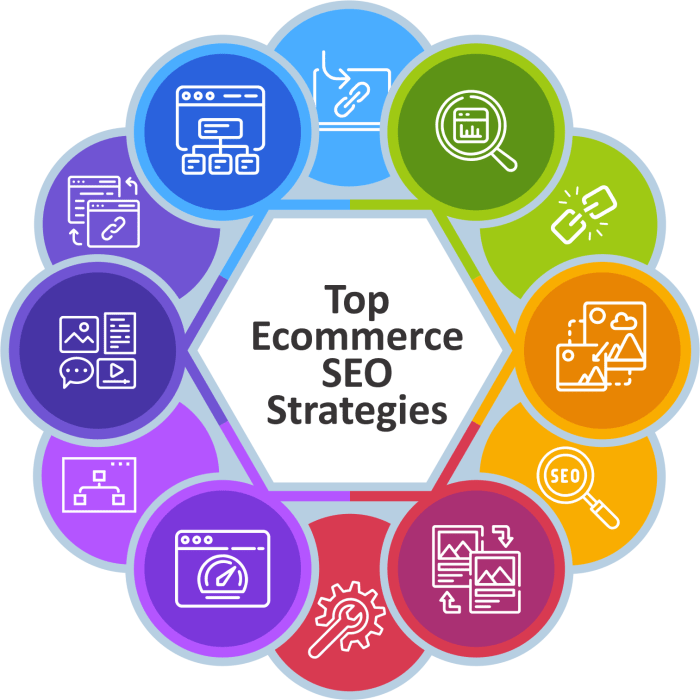
Creating engaging content is crucial for improving on ecommerce websites. By providing valuable information, you can attract more visitors and increase your chances of ranking higher in search engine results. Product descriptions, blogs, and guides play a significant role in enhancing the overall strategy for ecommerce sites.
Optimizing images and videos also plays a key role in improving search engine visibility.
Importance of Product Descriptions, Blogs, and Guides
Product descriptions are essential for providing detailed information about your products to both users and search engines. By including relevant s and unique selling points, you can improve your chances of ranking for specific search queries. Blogs and guides, on the other hand, offer opportunities to create fresh and engaging content that can attract organic traffic to your site.
They also help establish your authority in your niche and build trust with your audience.
- Ensure product descriptions are unique, informative, and -rich.
- Regularly update your blog with relevant and engaging content related to your products or industry.
- Create comprehensive guides that provide value to your audience and address common questions or concerns.
Optimizing Images and Videos for Search Engines
Images and videos are valuable assets that can enhance the user experience on your ecommerce site. However, they also need to be optimized for search engines to improve visibility and rankings.
- Use descriptive filenames and alt tags for images to help search engines understand the content.
- Compress images to improve page load times and overall site performance.
- Create video transcripts and optimize video titles and descriptions with relevant s.
Technical for Ecommerce
In the world of Ecommerce, technical plays a crucial role in determining the success of your online store. From site speed to website structure, various technical aspects can impact your search engine rankings and overall online visibility.
Significance of Site Speed and Mobile Responsiveness
Site speed and mobile responsiveness are not just important for user experience but also for . Search engines like Google prioritize websites that load quickly and provide a seamless experience across devices.
- Optimize images and videos to reduce load times.
- Utilize caching mechanisms to speed up website performance.
- Ensure your website is mobile-friendly and responsive to different screen sizes.
Optimizing Website Structure and Navigation
A well-structured website with intuitive navigation can improve user experience and performance.
- Create a clear hierarchy with categories and subcategories for easy navigation.
- Include internal links to connect relevant pages and improve crawlability.
- Optimize URLs and use breadcrumbs for better navigation and user understanding.
Schema Markup and its Role in Ecommerce
Schema markup helps search engines understand the content on your website better, leading to enhanced visibility in search results.
- Implement product schema markup to provide detailed information about your products.
- Use organization schema markup to highlight your business information.
- Include review schema markup to showcase customer feedback and ratings.
Ending Remarks
In conclusion, mastering Ecommerce Strategies: How to Rank Higher and Get More Traffic can pave the way for increased online visibility and business growth. By implementing the right techniques and staying updated with the latest trends, you can position your ecommerce site for success in the competitive digital landscape.
FAQ Section
What is the significance of for ecommerce websites?
for ecommerce websites is crucial as it helps improve visibility, drive organic traffic, and increase sales. Without , your online store may struggle to compete effectively in search engine results.
How can I optimize product pages for better search engine rankings?
Optimizing product pages involves using relevant s, optimizing meta tags, images, and descriptions, improving page load speed, and enhancing user experience.
What role do backlinks play in ecommerce ?
Backlinks are important for ecommerce as they signal to search engines the credibility and authority of your website. Quality backlinks from reputable sources can positively impact your search rankings.