Embark on the journey of starting an Ecommerce Business Step by Step in 2026, where innovation meets strategy in the realm of online commerce. This guide promises to unravel the intricacies of establishing and growing an online business in the dynamic landscape of the U.S.
market.
Join us as we delve into the essentials of market research, legal considerations, online store setup, marketing tactics, and the art of scaling your business for success in the digital sphere.
Introduction to Ecommerce Business
An ecommerce business refers to buying and selling goods or services online through a website or online marketplace. It allows customers to browse products, make purchases, and complete transactions entirely online.
Benefits of Starting an Ecommerce Business
- Global Reach: Ecommerce businesses have the potential to reach customers worldwide, breaking through geographical barriers.
- Lower Costs: Operating an online store typically involves lower overhead costs compared to traditional brick-and-mortar stores.
- 24/7 Availability: Ecommerce businesses can operate round the clock, offering customers the convenience of shopping at any time.
- Data-driven Decisions: Online platforms provide valuable customer data that can be used to make informed business decisions and personalize the shopping experience.
Potential Challenges and Risks of Ecommerce Businesses
- Intense Competition: The ecommerce market is highly competitive, requiring businesses to differentiate themselves to stand out.
- Cybersecurity Threats: Ecommerce businesses are vulnerable to cyber attacks, data breaches, and fraud, necessitating robust security measures.
- Logistical Issues: Managing inventory, order fulfillment, and shipping can pose challenges for ecommerce businesses, especially as they scale.
- Customer Trust: Building trust with online customers can be challenging, as they may have concerns about the security of their personal information and the quality of products.
Market Research and Niche Selection
Market research and niche selection are crucial steps in starting an ecommerce business. Conducting thorough market research helps you understand the industry landscape, competition, and customer behavior. Selecting a niche market allows you to focus your efforts on a specific target audience, increasing the chances of success.
Conducting Market Research
Market research involves gathering and analyzing information about the market you plan to enter. Here are some key steps to conduct effective market research for your ecommerce business:
- Identify your target market: Understand who your potential customers are, their demographics, preferences, and buying behavior.
- Analyze the competition: Research your competitors, their products, pricing strategies, and marketing tactics to identify gaps and opportunities.
- Assess market trends: Stay updated on industry trends, consumer preferences, and technological advancements that may impact your business.
- Collect data: Use surveys, interviews, focus groups, and online tools to gather relevant data and insights.
The Importance of Niche Selection
Choosing a niche market allows you to differentiate your business from competitors and tailor your products or services to meet the specific needs of your target customers. Here's why niche selection is important:
- Less competition: Focusing on a niche market with less competition gives you a better chance to stand out and attract customers.
- Targeted marketing: With a niche market, you can create targeted marketing campaigns that resonate with your audience and drive conversions.
- Build expertise: Specializing in a niche allows you to become an expert in that area, gaining credibility and trust from customers.
Identifying Target Customers and Their Needs
To identify your target customers and their needs, consider the following:
- Demographics: Understand the age, gender, location, income level, and other relevant characteristics of your target audience.
- Psychographics: Dive deeper into the interests, values, lifestyles, and behaviors of your target customers to create personalized experiences.
- Needs and pain points: Identify the problems or challenges your target customers face and how your products or services can address those needs effectively.
Business Planning and Legal Considerations
Starting an ecommerce business involves careful planning and consideration of legal requirements to ensure a successful and compliant venture.
Key Components of a Business Plan
Before launching your ecommerce business, it is essential to develop a comprehensive business plan that Artikels your goals, target market, products or services, marketing strategies, financial projections, and operational plan. A well-crafted business plan serves as a roadmap for your business and helps you stay focused on achieving your objectives.
- Determine your business model and value proposition.
- Conduct a competitive analysis to identify your strengths and weaknesses.
- Define your target market and create a marketing plan to reach them.
- Establish financial projections and a budget for your ecommerce business.
- Create an operational plan outlining day-to-day operations and logistics.
Legal Requirements for Starting an Ecommerce Business in the U.S.
When starting an ecommerce business in the U.S., there are several legal considerations to keep in mind to ensure compliance with regulations and protect your business.
- Register your business entity with the appropriate state authorities.
- Obtain necessary permits and licenses for your ecommerce business.
- Comply with tax laws and regulations, including sales tax collection and reporting.
- Implement data privacy and security measures to protect customer information.
- Adhere to advertising and marketing regulations to avoid misleading practices.
Importance of Trademarks, Copyrights, and Intellectual Property
Protecting your intellectual property is crucial for the success and longevity of your ecommerce business. Trademarks, copyrights, and other intellectual property rights safeguard your brand, products, and content from infringement and unauthorized use.
- Register trademarks for your brand name, logo, and other distinctive assets to prevent others from using them.
- Secure copyrights for original content, such as product descriptions, images, and website copy.
- Monitor and enforce your intellectual property rights to prevent infringement and maintain the integrity of your brand.
Setting Up Your Online Store
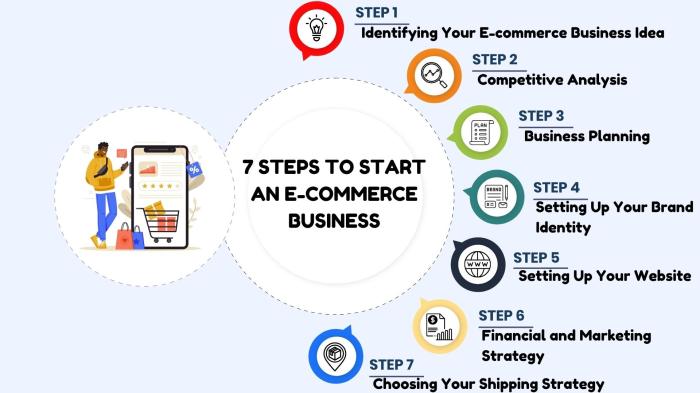
When starting an ecommerce business, setting up your online store is a crucial step in establishing your digital presence and attracting customers. Choosing the right ecommerce platform, designing an attractive website, and optimizing product listings are essential for success in the online marketplace.
Choosing an Ecommerce Platform
When selecting an ecommerce platform, consider factors such as ease of use, customization options, payment gateways, and scalability. Popular platforms like Shopify, WooCommerce, and BigCommerce offer a range of features to help you create and manage your online store efficiently.
Evaluate each platform based on your business needs and budget before making a decision.
Design Considerations for an Ecommerce Website
The design of your ecommerce website plays a significant role in attracting and retaining customers. Choose a clean and user-friendly layout that highlights your products and makes the shopping experience seamless. Ensure that your website is mobile-responsive, as many consumers shop on their smartphones and tablets.
Incorporate high-quality images, clear product descriptions, and easy navigation to enhance the overall user experience.
Optimizing Product Listings for Search Engines
To improve visibility and drive organic traffic to your online store, optimize your product listings for search engines. Use relevant s in product titles, descriptions, and meta tags to improve search engine rankings. Include high-quality images, detailed product information, and customer reviews to enhance the credibility of your listings.
Regularly update and optimize your product pages to stay competitive in the online market.
Inventory Management and Order Fulfillment
Effective inventory management and order fulfillment are crucial aspects of running a successful ecommerce business. Properly managing your inventory and fulfilling orders in a timely manner can help you maintain customer satisfaction and streamline your operations.
Inventory Management Strategies
- Implement an inventory tracking system to monitor stock levels and product performance.
- Utilize forecasting techniques to predict demand and optimize inventory levels.
- Establish reorder points to ensure you never run out of popular products.
- Regularly audit your inventory to identify slow-moving items and prevent overstocking.
Order Fulfillment Process
- Receive and process orders promptly to avoid delays in shipment.
- Pick and pack items efficiently to minimize errors and ensure accurate order fulfillment.
- Choose reliable shipping partners to deliver orders quickly and safely to customers.
- Provide customers with tracking information to keep them informed about their order status.
Tips for Handling Shipping and Returns
- Offer multiple shipping options to cater to different customer preferences, such as standard, expedited, or same-day delivery.
- Set clear shipping policies regarding costs, delivery times, and return procedures to manage customer expectations.
- Streamline the returns process by providing prepaid return labels and easy instructions for customers.
- Regularly review and optimize your shipping and returns processes to improve efficiency and customer satisfaction.
Marketing and Customer Acquisition
When it comes to running a successful ecommerce business, marketing and customer acquisition play a crucial role in driving sales and growing your brand. In this section, we will explore various digital marketing strategies that can help you promote your ecommerce business effectively.
Digital Marketing Strategies
- Search Engine Optimization (): Investing in can help improve your website's visibility on search engines like Google. By optimizing your website with relevant s, meta tags, and high-quality content, you can attract organic traffic to your online store.
- Social Media Marketing: Utilizing social media platforms such as Facebook, Instagram, and Twitter can help you reach a wider audience and engage with potential customers. Create compelling content, run targeted ads, and engage with your followers to build brand awareness and drive traffic to your ecommerce store.
- Email Marketing: Building an email list of customers and prospects can be a powerful marketing tool. Send out newsletters, promotional offers, and personalized recommendations to keep your audience engaged and encourage repeat purchases.
Building and Engaging with Your Customer Base
Building a loyal customer base is essential for the long-term success of your ecommerce business. Here are some strategies to help you build and engage with your customer base:
- Provide excellent customer service: Respond promptly to customer inquiries, resolve issues efficiently, and provide a seamless shopping experience to build trust and loyalty.
- Personalize the shopping experience: Use data analytics to understand your customers' preferences and behavior. Tailor product recommendations, promotions, and marketing messages to create personalized shopping experiences.
- Run loyalty programs and promotions: Encourage repeat purchases by offering loyalty rewards, exclusive discounts, and special promotions to your existing customers. Rewarding customer loyalty can help increase customer retention and drive sales.
Analytics and Optimization
Analytics plays a crucial role in measuring the performance of your ecommerce business. By tracking and analyzing data, you can gain valuable insights into customer behavior, sales trends, and overall business performance. This information is essential for making informed decisions and optimizing your online store for better results.
Interpreting Key Metrics
- Conversion Rates: Conversion rates indicate the percentage of website visitors who take a desired action, such as making a purchase. By monitoring and analyzing conversion rates, you can identify areas for improvement in your sales funnel and website design.
- Customer Lifetime Value: Customer lifetime value (CLV) measures the total revenue a customer is expected to generate over their entire relationship with your business. Understanding CLV can help you tailor your marketing strategies and customer retention efforts.
Optimizing Your Ecommerce Store
- Utilize A/B Testing: A/B testing involves comparing two versions of a webpage to see which one performs better. By testing different elements such as headlines, images, and call-to-action buttons, you can optimize your website for higher conversions.
- Personalize the Shopping Experience: Use data insights to personalize product recommendations, marketing messages, and special offers for individual customers. Personalization can enhance customer engagement and drive repeat purchases.
- Improve Site Speed: A fast-loading website is crucial for providing a seamless shopping experience. Optimize your site speed by compressing images, minimizing plugins, and utilizing a reliable web hosting service.
- Monitor and Adjust: Continuously monitor your analytics data and make adjustments based on performance trends. Stay agile and responsive to changes in customer behavior and market conditions to stay competitive in the ecommerce landscape.
Scaling Your Ecommerce Business
Scaling your ecommerce business is crucial for long-term success. As your business grows, you need to implement strategies that will allow you to expand, enter new markets, and maintain customer satisfaction.
Considerations for Expanding Product Lines or Entering New Markets
When expanding your product lines or entering new markets, there are several key considerations to keep in mind:
- Conduct thorough market research to identify demand for your products in new markets.
- Assess the competition and determine how you can differentiate your offerings.
- Understand the cultural and regulatory differences of the new market.
- Develop a solid marketing strategy tailored to the new market.
Maintaining Customer Satisfaction While Growing Your Business
Customer satisfaction is essential for the success of your ecommerce business. Here are some ways to maintain customer satisfaction while scaling your business:
- Provide excellent customer service with prompt responses to inquiries and issues.
- Ensure fast and reliable shipping to meet customer expectations.
- Solicit feedback from customers and use it to improve your products and services.
- Implement a seamless returns and exchange process to enhance customer experience.
Conclusive Thoughts
As we draw the curtains on this exploration of How to Start an Ecommerce Business Step by Step (U.S. Guide for 2026), remember that the key to thriving in the world of online commerce lies in adaptability, innovation, and a deep understanding of your market and customers.
May your ecommerce journey be filled with growth, success, and endless possibilities.
User Queries
What are the legal requirements for starting an ecommerce business in the U.S.?
To legally operate an ecommerce business in the U.S., you typically need to register your business, obtain relevant licenses and permits, comply with tax regulations, and adhere to consumer protection laws. It's advisable to consult with legal professionals for specific guidance.
How can I optimize product listings for search engines?
To optimize product listings for search engines, focus on using relevant s, writing compelling product descriptions, adding high-quality images, obtaining customer reviews, and ensuring your website is user-friendly and mobile-responsive.
What are some effective digital marketing strategies for promoting an ecommerce business?
Effective digital marketing strategies for promoting an ecommerce business include search engine optimization (), social media marketing, email marketing, influencer partnerships, content marketing, and online advertising. Tailor your strategies based on your target audience and business goals.