Delving into Dropshipping Ecommerce Business Guide: How to Start with Low Capital, this introduction immerses readers in a unique and compelling narrative, providing a detailed overview of key aspects in a concise, engaging manner.
Introduction to Dropshipping Ecommerce Business
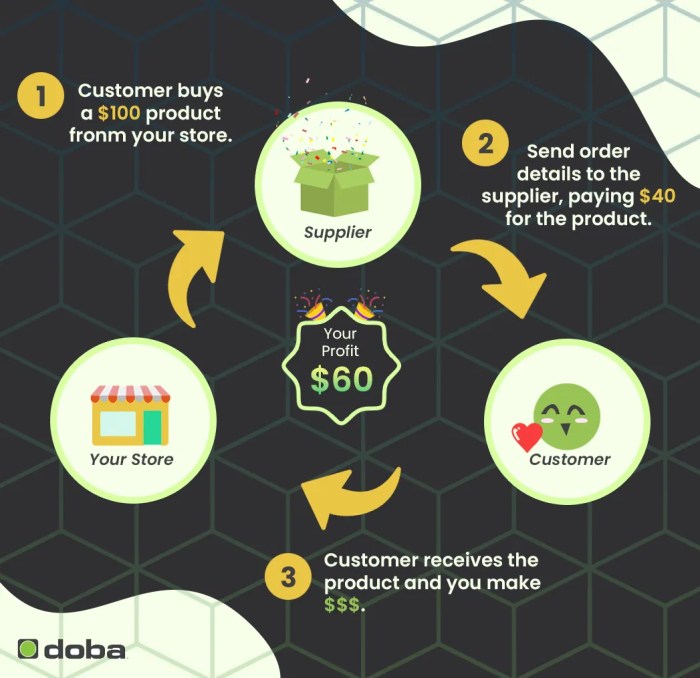
Dropshipping is a business model in which the seller does not keep products in stock. Instead, when a customer makes a purchase, the seller purchases the item from a third party and has it shipped directly to the customer. This eliminates the need for inventory management and upfront investment in stock.Dropshipping differs from traditional retail models in that the seller does not need to handle or store any inventory.
This means lower overhead costs and less risk involved in the business. The focus is on marketing and customer service rather than managing stock and logistics.
Benefits of Starting a Dropshipping Business with Low Capital
- Low Initial Investment: One of the biggest advantages of dropshipping is that you can start with very little capital. Since you do not need to purchase inventory upfront, you can focus your resources on building a strong online presence and marketing your products.
- Low Overhead Costs: With no need for warehouse space or inventory management, dropshipping businesses have lower overhead costs compared to traditional retail businesses. This allows you to invest more in marketing and growing your business.
- Flexibility and Scalability: Dropshipping offers flexibility in terms of the products you sell and the suppliers you work with. This allows you to easily scale your business up or down depending on demand without the constraints of managing inventory.
- Low Risk: Since you do not need to purchase inventory upfront, the risk of unsold stock or dead inventory is significantly reduced. This makes dropshipping a low-risk business model, especially for entrepreneurs with limited capital.
Market Research and Product Selection
Market research and product selection are crucial steps in setting up a successful dropshipping business. Conducting thorough market research will help you identify profitable products and choose the right niche to focus on.
Tips for Market Research
- Start by analyzing trends in the market to understand what products are in demand.
- Use tools like Google Trends, Amazon Best Sellers, and social media platforms to gather data on popular products.
- Study your competitors to see what products they are selling and how they are marketing them.
Identifying Profitable Products
- Look for products with high demand but low competition to maximize your chances of success.
- Consider products with a good profit margin to ensure that your dropshipping business is financially viable.
- Focus on products that are lightweight, durable, and easy to ship to minimize shipping costs and avoid logistical issues.
Importance of Selecting the Right Niche
- Choosing the right niche will help you target a specific audience and stand out in a crowded market.
- A niche that you are passionate about or have knowledge in can make it easier for you to market and sell products effectively.
- By selecting a niche, you can build a brand identity and establish yourself as an expert in that particular market segment.
Setting Up Your Dropshipping Store

When it comes to setting up your dropshipping store, there are several key steps you need to follow in order to create a successful ecommerce website.
Choosing a Platform
One of the first decisions you need to make is choosing the right platform for your dropshipping store. Consider platforms like Shopify, WooCommerce, or BigCommerce, which are popular choices for ecommerce websites.
Design and Branding
- Create a visually appealing and user-friendly design for your website that reflects your brand identity.
- Use high-quality images and clear product descriptions to showcase your products effectively.
- Ensure your website is mobile responsive to provide a seamless user experience across all devices.
Product Catalog
Build a comprehensive product catalog that includes a variety of products in different categories to attract a wider range of customers.
Payment and Shipping Options
- Integrate secure payment gateways to offer customers a variety of payment options.
- Provide clear shipping information and options to set realistic expectations for delivery times.
and Marketing Strategies
- Optimize your website for search engines to improve visibility and attract organic traffic.
- Implement marketing strategies such as social media advertising, email marketing, and influencer partnerships to promote your products.
Finding Reliable Suppliers and Partners
Finding reliable suppliers and partners is crucial for the success of your dropshipping business. These are the key steps to take when searching for and vetting potential suppliers:
Research and Vetting Process
- Start by conducting thorough research online to find potential suppliers in your niche. Look for reviews, ratings, and feedback from other dropshippers to gauge their reputation.
- Reach out to the suppliers and ask for samples of their products to assess the quality and shipping times. This will also give you a chance to evaluate their communication and customer service.
- Check if the supplier has a good track record of timely deliveries and accurate order fulfillment. Look for any red flags such as frequent stockouts or shipping delays.
- Verify the supplier's credentials and certifications to ensure they meet industry standards and compliance requirements.
Criteria for Selecting Trustworthy Suppliers
- Reliability: Choose suppliers with a proven track record of delivering quality products on time.
- Transparency: Look for suppliers who are transparent about their pricing, shipping policies, and terms of service.
- Communication: Select suppliers who are responsive and easy to reach in case of any issues or inquiries.
- Scalability: Partner with suppliers who can accommodate your business growth and scale along with your needs.
Building Strong Relationships with Suppliers and Partners
- Communicate openly and transparently with your suppliers to establish trust and mutual understanding.
- Negotiate favorable terms and conditions that benefit both parties and foster a long-term partnership.
- Provide feedback and suggestions for improvement to help suppliers enhance their products and services.
- Stay updated on industry trends and market demands to collaborate effectively with suppliers on new product offerings.
Marketing and Promoting Your Dropshipping Business
In order to drive traffic to your dropshipping store and generate sales, it is crucial to implement effective marketing strategies. Utilizing various channels and techniques can help you reach a wider audience and increase your brand visibility.
Strategies for Driving Traffic to Your Dropshipping Store
- Optimize your website for search engines () to improve your store's visibility in search results.
- Utilize pay-per-click (PPC) advertising on platforms like Google Ads to target potential customers based on relevant s.
- Run social media ads on platforms like Facebook, Instagram, and Pinterest to reach a larger audience and drive traffic to your store.
- Create engaging content such as blog posts, videos, and infographics to attract and retain customers.
The Role of Social Media Marketing in Promoting Your Products
- Social media platforms offer a great opportunity to showcase your products and engage with your target audience.
- Utilize Instagram, Facebook, Twitter, and Pinterest to create visually appealing posts and share updates about your products.
- Interact with your followers, respond to comments and messages, and build a community around your brand.
- Use social media analytics to track the performance of your posts and make data-driven decisions to improve your marketing strategies.
Tips on Leveraging Influencer Partnerships for Marketing Your Dropshipping Business
- Collaborate with influencers in your niche to promote your products to their followers and expand your reach.
- Choose influencers whose audience aligns with your target market to ensure maximum impact and engagement.
- Offer influencers free products or commission-based partnerships to incentivize them to promote your brand.
- Track the performance of influencer campaigns using unique discount codes or affiliate links to measure their effectiveness.
Concluding Remarks
In conclusion, this guide has explored the essential steps to kickstart your dropshipping business with minimal capital investment, offering valuable insights and strategies to help you succeed in the competitive ecommerce landscape.
Query Resolution
How can I effectively conduct market research for dropshipping?
Conduct thorough market research by analyzing trends, competition, and target audience preferences to identify lucrative opportunities.
What essential elements should be included on my dropshipping website?
Key elements include clear product descriptions, easy navigation, secure payment gateways, and responsive design for optimal user experience.
How do I establish strong relationships with dropshipping suppliers?
Communicate transparently, meet deadlines, and maintain a professional attitude to build trust and rapport with suppliers for long-term partnerships.