
Embarking on the journey of Ecommerce Marketing Strategies That Actually Drive Sales in 2026, we delve into the realm of online sales to uncover the latest trends and strategies that are reshaping the landscape.
As we navigate through the intricacies of personalized marketing, omnichannel approaches, user-generated content, voice search optimization, and sustainability, we unravel the secrets to success in the evolving world of ecommerce.
Ecommerce Marketing Trends in 2026
In 2026, several emerging trends are reshaping the landscape of ecommerce marketing, influencing how businesses connect with their target audience and drive sales online.
Personalized Customer Experiences
One of the key trends in ecommerce marketing for 2026 is the focus on delivering personalized customer experiences. With advancements in AI and machine learning, businesses can now gather and analyze vast amounts of data to tailor their marketing strategies to individual preferences and behaviors.
By creating personalized product recommendations, targeted promotions, and customized content, companies can enhance customer engagement and loyalty.
Social Commerce Integration
Another trend shaping the future of online sales is the integration of social commerce into ecommerce platforms. With the rise of social media as a powerful marketing channel, businesses are leveraging social networks to reach and convert customers directly within their platforms.
By integrating shopping features into social media sites, brands can streamline the purchasing process and capitalize on the influence of social proof and user-generated content.
Augmented Reality Shopping Experiences
Advancements in augmented reality (AR) technology are revolutionizing the way customers shop online. In 2026, more ecommerce businesses are adopting AR tools to offer interactive and immersive shopping experiences. By allowing customers to visualize products in their physical space before making a purchase, AR enhances product engagement, reduces return rates, and increases overall customer satisfaction.
Voice Commerce Optimization
As voice-enabled devices become increasingly prevalent in households, optimizing for voice search and voice commerce is becoming essential for ecommerce success. In 2026, businesses are focusing on creating voice-friendly content and developing voice commerce capabilities to cater to the growing number of consumers using voice assistants for shopping.
By providing seamless voice-activated shopping experiences, brands can stay ahead of the curve and meet evolving customer preferences.
Personalization Strategies for Ecommerce
Personalized marketing plays a crucial role in driving sales for ecommerce businesses. By tailoring the shopping experience to individual customers, businesses can increase engagement, build customer loyalty, and ultimately boost sales.
Importance of Personalized Marketing
Personalized marketing allows businesses to connect with customers on a more personal level, making them feel valued and understood. This leads to higher conversion rates and repeat purchases, as customers are more likely to buy from a brand that caters to their specific needs and preferences.
- Creating personalized product recommendations based on past purchases and browsing behavior.
- Sending personalized email campaigns with targeted content and promotions.
- Implementing dynamic pricing strategies based on customer segments and behavior.
Examples of Successful Personalized Marketing Campaigns
Several ecommerce brands have successfully implemented personalized marketing strategies to drive sales:
Amazon's personalized product recommendations based on browsing history and purchase behavior have significantly increased sales and customer retention.
- Netflix's personalized movie and TV show recommendations have helped improve user engagement and reduce churn rates.
- Sephora's personalized beauty recommendations and targeted promotions have led to increased sales and customer satisfaction.
AI and Machine Learning in Enhancing Personalization
Artificial intelligence (AI) and machine learning are revolutionizing personalized marketing in ecommerce by analyzing vast amounts of customer data to predict preferences and behavior.
- AI-powered chatbots provide personalized assistance to customers, improving the shopping experience and driving sales.
- Machine learning algorithms help ecommerce businesses segment customers effectively and deliver personalized content in real-time.
- Personalization platforms use AI to optimize product recommendations and marketing campaigns for maximum impact.
Omnichannel Marketing Approach
An omnichannel marketing approach involves seamlessly integrating all available channels, both online and offline, to provide a unified and consistent customer experience. This strategy focuses on meeting customers wherever they are, whether it's through social media, email, mobile apps, physical stores, or websites, to create a cohesive and personalized journey.
Benefits of an Omnichannel Strategy vs Single-Channel Approach
- Enhanced Customer Experience: By connecting all touchpoints, customers receive a consistent and personalized experience across channels, leading to higher satisfaction and loyalty.
- Increased Sales and Conversions: Omnichannel customers tend to spend more and convert at a higher rate compared to those engaging with just one channel.
- Improved Data Collection and Analysis: With data gathered from multiple channels, businesses gain valuable insights into customer behaviors and preferences, enabling more targeted marketing efforts.
- Brand Cohesion: A unified message and brand image are maintained across all channels, reinforcing brand identity and recognition.
Examples of Brands Implementing Omnichannel Marketing
- Starbucks:Starbucks seamlessly integrates its mobile app, online ordering platform, loyalty program, and physical stores to provide a consistent experience for customers, allowing them to order ahead, earn rewards, and pick up in-store.
- Nike:Nike utilizes its website, mobile app, social media platforms, and physical stores to create a seamless shopping experience. Customers can browse products online, customize their shoes, and even receive personalized recommendations based on their preferences.
- Disney:Disney offers an omnichannel experience by allowing customers to interact with the brand through its theme parks, movies, TV shows, merchandise, and digital platforms. This approach ensures that customers of all ages can engage with Disney in various ways, maintaining a strong connection with the brand.
User-Generated Content Strategies
User-generated content has become a powerful tool in driving ecommerce sales, as it helps build trust and authenticity among consumers. When shoppers see positive feedback and reviews from other users, they are more likely to make a purchase. Here we will explore the impact of user-generated content on ecommerce sales and share tactics for leveraging this content in marketing strategies.
Utilizing User-Generated Content in Marketing Strategies
- Encourage customers to leave reviews and ratings on your website or social media platforms to showcase their experiences with your products.
- Run user-generated content campaigns where customers can share photos or videos of themselves using your products. This not only provides social proof but also engages your audience.
- Showcase user-generated content on your product pages to give potential customers a real-life perspective on how your products are being used and appreciated by others.
- Create a dedicated space on your website for user-generated content, such as a customer gallery or testimonials section, to highlight the positive feedback from satisfied customers.
The Role of Social Proof in Driving Sales through User-Generated Content
- Consumers are more likely to trust recommendations from their peers rather than traditional advertising, making user-generated content a valuable source of social proof.
- By showcasing real customer experiences and testimonials, you can build credibility and trust with potential buyers, ultimately leading to increased sales.
- User-generated content also helps create a sense of community around your brand, as customers feel valued and appreciated when their content is featured, leading to brand loyalty and repeat purchases.
Voice Search Optimization for Ecommerce
Voice search has become increasingly prevalent in recent years, with the rise of virtual assistants like Siri, Alexa, and Google Assistant. For ecommerce businesses, optimizing for voice search is crucial to stay competitive in the market and meet the evolving needs of consumers.
In this section, we will explore the significance of voice search for ecommerce, provide tips for optimizing ecommerce websites for voice search, and discuss the challenges and opportunities this trend presents in ecommerce marketing.
Importance of Voice Search for Ecommerce
Voice search is revolutionizing the way consumers interact with technology and search for information online. With the growing popularity of voice-activated devices, more and more people are using voice search to shop online. In fact, studies show that voice commerce sales are expected to reach billions of dollars in the coming years.
- Optimize for conversational s and long-tail phrases.
- Focus on local to capture voice searches for nearby products or services.
- Ensure your website is mobile-friendly and loads quickly to accommodate voice search users.
- Create FAQ pages and structured data to provide direct answers to voice search queries.
Challenges and Opportunities of Voice Search in Ecommerce Marketing
While voice search presents great opportunities for ecommerce businesses, it also comes with its own set of challenges. One major challenge is ensuring accurate voice recognition and understanding natural language queries. However, by embracing voice search optimization, businesses can enhance the customer experience, drive more traffic to their websites, and ultimately increase sales.
- Personalize the shopping experience based on voice search data and insights.
- Implement voice search analytics to track performance and optimize strategies.
- Stay updated on voice search trends and technology to remain competitive in the market.
- Experiment with voice-enabled shopping features like voice-activated reordering or personalized recommendations.
Sustainability in Ecommerce Marketing
In recent years, sustainability has become a key factor in consumer purchasing decisions, with more and more shoppers choosing to support brands that prioritize environmental and social responsibility. This shift in consumer behavior has forced ecommerce businesses to reevaluate their marketing strategies and incorporate sustainable practices to stay competitive in the market.
Incorporating Sustainability into Ecommerce Marketing
- Utilize eco-friendly packaging: Ecommerce brands can reduce their carbon footprint by using recyclable or biodegradable packaging materials. This not only appeals to environmentally conscious consumers but also showcases the brand's commitment to sustainability.
- Highlight sustainable sourcing: Communicate transparently about the sourcing of products, emphasizing fair trade practices, organic materials, or ethical production methods. This transparency builds trust with consumers who value sustainability.
- Promote recycling and upcycling: Encourage customers to recycle packaging or old products by providing information on how to do so. Consider offering incentives for returning used items for recycling or upcycling.
Impact of Sustainable Practices on Ecommerce Sales
Embracing sustainable practices in ecommerce marketing can have a significant impact on driving sales and customer loyalty. Studies have shown that a growing number of consumers are willing to pay a premium for sustainable products and support brands that align with their values.
By incorporating sustainability into their marketing strategies, ecommerce businesses can attract a larger customer base, increase brand loyalty, and ultimately drive sales.
Final Conclusion
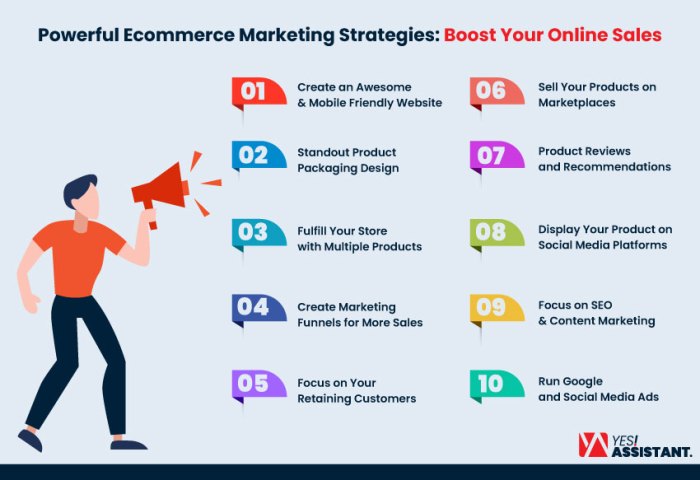
In conclusion, Ecommerce Marketing Strategies That Actually Drive Sales in 2026 are not just about following trends but creating innovative paths to engage customers and boost sales. By embracing personalization, omnichannel tactics, user-generated content, voice search optimization, and sustainability, businesses can stay ahead of the curve and thrive in the competitive ecommerce landscape.
Expert Answers
How important is personalization in driving ecommerce sales?
Personalization plays a crucial role in creating tailored experiences for customers, increasing engagement, and ultimately driving sales by connecting on a more individual level.
What is the significance of user-generated content in ecommerce marketing?
User-generated content serves as authentic social proof, building trust with customers and influencing purchasing decisions, making it a powerful tool in driving sales.
How can ecommerce brands incorporate sustainability into their marketing strategies?
Ecommerce brands can integrate sustainability by promoting eco-friendly practices, offering green products, and educating consumers on the environmental benefits of their purchases.
Why is voice search optimization important for ecommerce businesses?
Voice search optimization is vital for ecommerce businesses to adapt to changing search trends and provide a seamless shopping experience for customers using voice-activated devices.